

Modes
What Relay, Debate, Moot, and Auto actually do — with flow diagrams — and how to choose between speed, cost, and depth.
The mode decides how many models take part, what jobs they're given, and how long they argue. It's the single biggest lever you have over speed, cost, and depth.
Auto — let the router decide
Auto is the default. A small routing model reads your question and picks the cheapest deliberation shape that will answer it well.
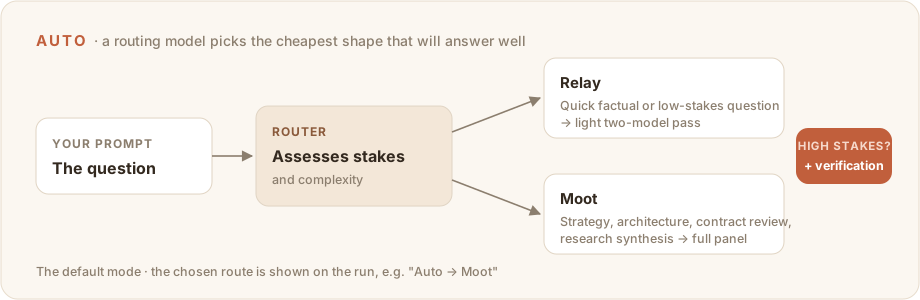
- Quick factual or low-stakes questions route to Relay with one round.
- Complex judgement — strategy, code architecture, contract review, research synthesis — routes to the full Moot panel.
- Questions that hinge on checkable facts where being wrong is costly are flagged high stakes, and the run adds a verification step that checks the panel's claims.
The run shows what was chosen (e.g. Auto → Moot), so Auto never hides the decision from you. If routing itself ever fails, the run falls back safely to Relay with one round.
Use Auto when you'd rather think about the question than the configuration.
Relay — one careful pass
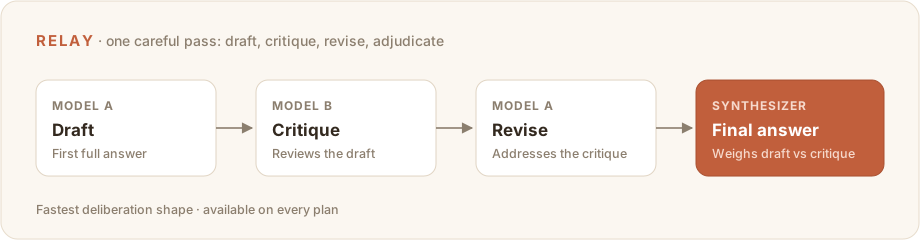
Relay is the lightest true deliberation:
- Model A writes a full draft.
- Model B critiques it.
- Model A revises to address the critique.
- The synthesizer weighs draft against critique and writes the final answer.
Use Relay for a fast second opinion, an edit pass on a draft, or any question where one good critique is enough. It's also the only mode on the Light plan.
Debate — structured disagreement
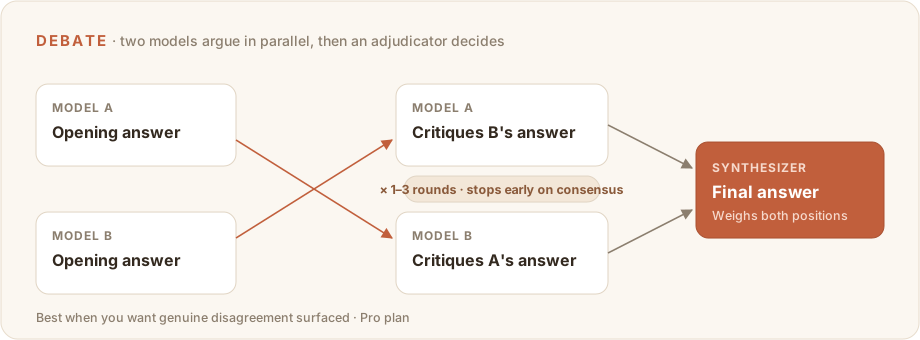
Debate puts two models in direct opposition:
- Both models write opening answers in parallel.
- Each critiques the other's answer.
- The exchange runs for the rounds you chose (1–3) — but stops early once neither side is moving the answer forward.
- The synthesizer weighs both positions and rules.
Use Debate when you want competing interpretations made explicit: "argue both sides of this pricing change," "is this architecture over-engineered or appropriately defensive?" The value is in the cross-examination, so give contested questions 2 rounds.
Moot — the full panel
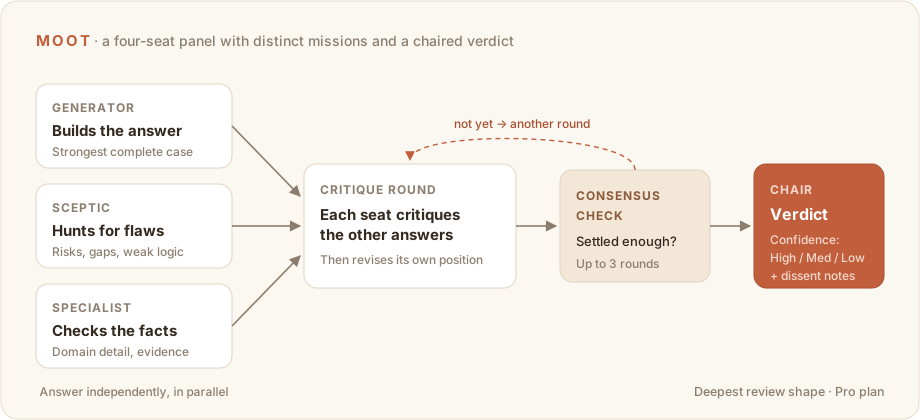
Moot separates the jobs a single model usually mashes together:
| Seat | Mission |
|---|---|
| Generator | Build the strongest complete answer |
| Sceptic | Hunt for flaws — risks, gaps, weak logic |
| Specialist | Check facts and domain detail |
| Chair | Adjudicate the panel and deliver the verdict |
The three panelists answer independently and in parallel — none of them sees the others' first drafts, so you get three genuinely different starting points. Then they critique each other and revise. After each round, a consensus check decides whether the panel is settled or needs another round (up to your rounds setting).
Finally the Chair rules: a verdict with a confidence level (High / Medium / Low) and, when the panel didn't fully agree, dissent notes telling you exactly what remained contested.
Use Moot for the questions you'd take to a real committee: irreversible decisions, contract or policy review, research conclusions, anything where you want ideation, criticism, and fact-checking done by different minds.
Rounds
Debate and Moot accept 1–3 rounds (set next to the mode picker).
- 1 round — the default. Right for most questions; you still get openings, one full critique pass, and adjudication.
- 2–3 rounds — for genuinely contested questions. More rounds give disagreement time to resolve — or to prove it won't, which is itself an answer.
Both modes stop early when consensus arrives, so a high rounds setting is a ceiling, not a cost commitment.
Choosing: the honest trade-offs
| Mode | Speed | Cost | Depth | Best for |
|---|---|---|---|---|
| Relay | Fastest | Lowest | One critique pass | Quick second opinions, edit passes |
| Debate | Medium | Medium | Adversarial, 2 positions | Contested calls, either/or decisions |
| Moot | Slowest | Highest | 3 perspectives + verdict | High-stakes, complex judgement |
| Auto | Varies | Varies | Matched to the question | Everything else — it's the default for a reason |
Plan availability
Light includes Relay with 1 round. Pro includes all modes with up to 3 rounds. Requests beyond your plan downgrade gracefully instead of failing — a Light user asking for Moot gets Relay. Details in plans & limits.
Which models fill the seats?
Every seat has a system default assigned by your admin in the role matrix. You can pin different models for your own runs in settings, or override the pair for a single run from the composer toolbar.